


 Cart
Cart
 sales@molnova.com


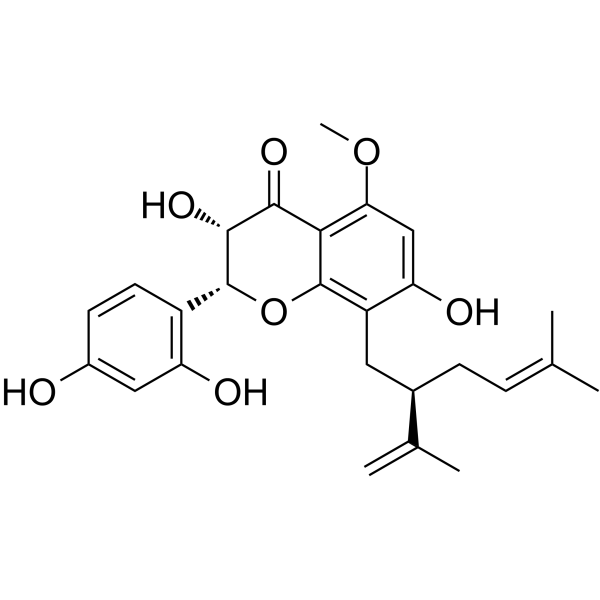
Kushenol N
CAS No. 102490-65-3
Kushenol N( —— )
Catalog No. M31174 CAS No. 102490-65-3
Kushenol N may have anti-allergic activity, it demonstrates significant inhibition of the release of beta-hexosaminidase from cultured RBL-2H3 cells .
Purity : >98% (HPLC)
 COA
Datasheet
HNMR
HPLC
MSDS
Handing Instructions
COA
Datasheet
HNMR
HPLC
MSDS
Handing Instructions
| Size | Price / USD | Stock | Quantity |
| 5MG | 567 | In Stock |


|
| 50MG | Get Quote | In Stock |
|
| 100MG | Get Quote | In Stock |
|
Biological Information
-
Product NameKushenol N
-
NoteResearch use only, not for human use.
-
Brief DescriptionKushenol N may have anti-allergic activity, it demonstrates significant inhibition of the release of beta-hexosaminidase from cultured RBL-2H3 cells .
-
DescriptionKushenol N may have anti-allergic activity, it demonstrates significant inhibition of the release of beta-hexosaminidase from cultured RBL-2H3 cells .
-
In Vitro——
-
In Vivo——
-
Synonyms——
-
PathwayOthers
-
TargetOther Targets
-
Recptor——
-
Research Area——
-
Indication——
Chemical Information
-
CAS Number102490-65-3
-
Formula Weight454.5
-
Molecular FormulaC26H30O7
-
Purity>98% (HPLC)
-
Solubility——
-
SMILES——
-
Chemical Name——
Shipping & Storage Information
-
Storage(-20℃)
-
ShippingWith Ice Pack
-
Stability≥ 2 years
Reference
molnova catalog



related products
-
A2793
A2793 is a chemical compound.
-
Stigmasterol
Extracted from Glycine max(L.)Merr.
-
Hemicholinium dibrom...
A potent inhibitor of the high affinity uptake system for CHOLINE. It has less effect on the low affinity uptake system.
